
Every winter, from November to March, Champagne’s winemakers enter a period that is as essential as it is time-consuming: vine pruning. A manual, precise, repetitive task… often carried out in temperatures that make you seriously consider staying under the duvet ☃️. In short, pruning is one of the great annual milestones of the winegrowing calendar.
For those outside the profession, pruning can seem obscure, even mysterious. Why cut so much? Why at this time of year? And above all: how does the vine survive it all? Let’s try to shed some light on the subject — without unnecessary jargon and with a touch of lightness.
So, what does “pruning” actually mean?
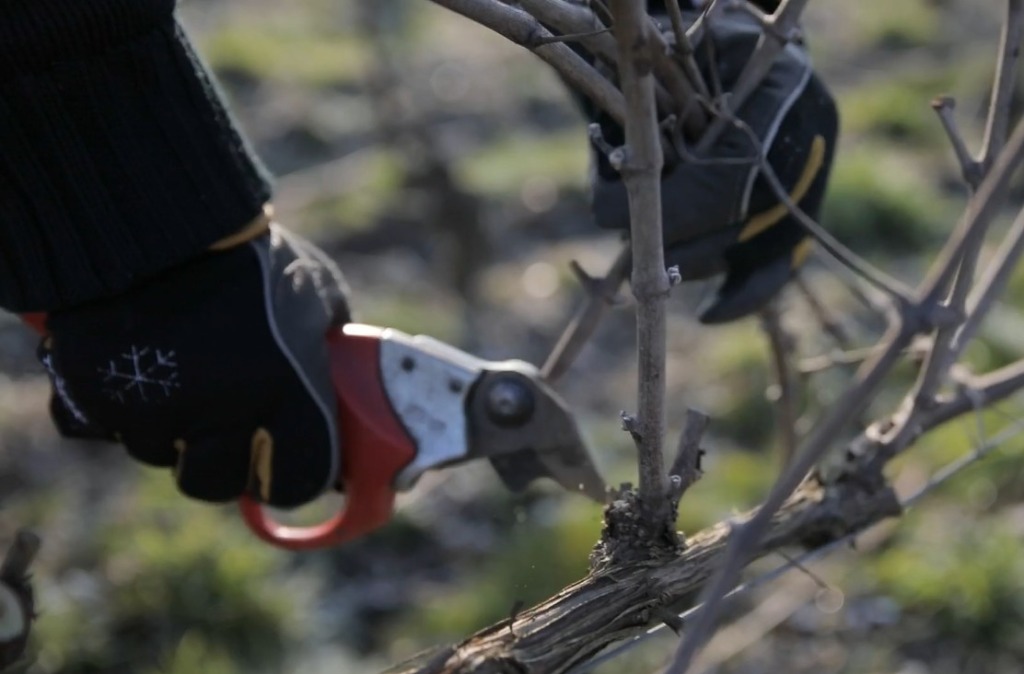
The official definition of pruning is: “To cut or work with a sharp tool in order to give a determined shape.” And that is exactly what the winemaker does: cutting canes with pruning shears to give a precise shape to each vine. Pruning, above all, means imposing an architecture on the plant. But why not let it grow freely? After all, a wild vine with canes stretching several metres can look rather beautiful, right? True… but not very productive 🍇.
💡 Good to know!
Winter is the only time of year when the vine is completely at rest. That makes it the ideal moment to prune without disturbing its growth. For visitors, it’s also the season when the vine’s structure is easiest to read and understand.
A plant full of energy (maybe too much of it?)
Two useful reminders help make sense of pruning:
1. The vine is a climbing plant. Like tropical lianas from a Tarzan movie or Virginia creeper on old walls, it loves to climb, spread and conquer space.
2. A winemaker’s job is to produce grapes: healthy, flavoursome and high quality.
The problem? If the vine is left to do what it prefers — grow ever further — it devotes most of its energy to vegetation… and far less to fruit. The result: lots of wood, few grapes, and rarely great ones. Pruning is therefore a smart compromise: slowing down growth to encourage reproduction. By deliberately limiting the number of canes and buds, we help the vine focus its energy where we need it most: in the grape clusters.
A highly regulated practice
In Champagne, as in other Appellation d’Origine Contrôlée (AOC) regions, pruning is anything but improvised. It is strictly regulated — to the point that specific training and certification are required to prune professionally. Why so many rules? Because everything depends on:
• the length of the canes that are kept,
• the number of “eyes” (buds) left after pruning.
The objective is clear: to guarantee grape quality. Too many buds, and the vine exhausts itself. Too few, and yields drop. Pruning is a true balancing act, where every cut of the secateurs matters.
Much more than just shortening canes
Giving shape to the vine is only the visible part of the iceberg. Pruning also makes it possible to:
• ensure the long-term health of the vine by preparing the wood of future years,
• regularly renew the permanent structure of the plant,
• distribute vegetation evenly to avoid overly dense areas (a paradise for diseases…),
• favour truly fruitful wood.
👉 To see what this looks like in real life, a winter walk through the Champagne vineyards is enough: there is always someone there, secateurs in hand, fully focused on a single vine.
And it doesn’t stop there: green pruning
One last, often overlooked detail: there is a second pruning stage carried out in spring, known as green pruning. This time, young shoots (green, hence the name) that will not bear fruit are removed by hand. Once again, the idea is simple: open up the vine, naturally limit disease pressure and encourage more even ripening of the grapes.
💡To finish, here is a small selection of questions I’m often asked — with the answers included!
Why do we see winemakers pruning vines in winter? Winter is the vine’s resting period. It’s the ideal time to prune without disrupting growth. This work prepares the next harvest and directly influences grape quality.
Can you visit the vineyards during pruning season? Absolutely — and it’s actually a fascinating time to visit! In winter, the vine is “bare”, making its structure and the winemaker’s work much easier to understand during walks or guided tours.
Does pruning really influence the taste of Champagne? Indirectly, yes. Well-pruned vines produce better-balanced, more concentrated grapes — and high-quality grapes are the essential foundation of great Champagne.
Why not let the vine grow naturally? Because the vine is a very vigorous climbing plant. Left unchecked, it produces lots of wood… and few grapes. Pruning channels its energy towards what truly matters: the clusters.
So next time you’re working or studying comfortably indoors in the depths of winter, spare a thought for those winemakers out in the cold and rain, secateurs in hand. Their quiet work today is the indispensable condition for the beautiful cuvées you’ll be enjoying tomorrow 🍾.